Envelope Math for Your Home Screen: A CFP's No-Drama System for Capping Casino App Spending
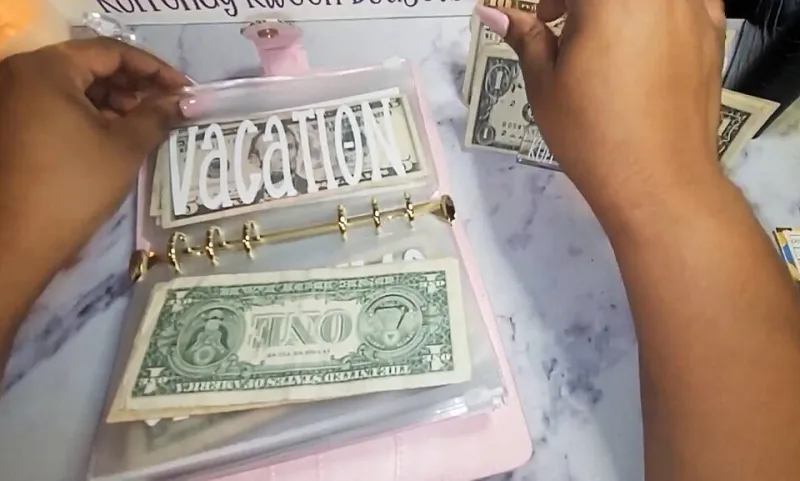
Photo: Kurrency Kween Budgets, CC BY 3.0, via Wikimedia Commons
Most budgeting advice for mobile gaming falls into two camps: total abstinence or vague hand-waving about 'self-control.' Neither is very useful if you like spinning a few reels on the couch after dinner.
So when we got the chance to talk budgeting with Dana Whitfield, a certified financial planner based in Columbus, Ohio, we asked the question our readers actually care about: is there a sane middle ground?
Her answer surprised us. Not only does she think casual casino app spending can fit into a healthy budget — she thinks pretending it doesn't exist is what actually gets people into trouble.
The Couple Who Didn't Know They Had a Problem
Whitfield walked us through an anonymized client case that stuck with her. A married couple in their mid-30s, both employed, no debt red flags — but during a routine annual review, their bank statements told a story they hadn't noticed.
'Individually, the charges were invisible,' she told us. '$4.99 here, $9.99 there. But when we added up twelve months of coin packs, bonus bundles, and one very memorable 'mega vault' purchase, it came to $2,640. That's $220 a month — more than their combined streaming subscriptions and gym memberships.'
The couple's reaction wasn't horror. It was embarrassment. And per Whitfield, that's the most common emotion in her office when app spending comes up.
'They weren't gambling addicts. They liked the games. The problem was that the spending had no ceiling, so it drifted upward every time a new promotion dropped.'
The Entertainment Envelope, Digitized
Whitfield's fix is a modern take on the classic cash-envelope method. Instead of stuffing twenties into a labeled envelope, you create a digital boundary with three steps:
1. Pick a number before the month starts. Whitfield suggests 1% of take-home pay as a ceiling for all app-based entertainment — casino games, mobile games, in-app purchases, everything. For a household bringing home $5,000 a month, that's $50. The couple in her case settled on $75, down from $220.
2. Make the money physically separate. Load a prepaid card or a dedicated checking account with that month's amount. When the card declines, the month is over. 'The friction is the feature,' Whitfield says. 'A saved credit card removes every natural stopping point.'
3. Review on the first of the month, not mid-crisis. Five minutes, one glance at the total. No judgment, just data.
She compares it to a 401(k) contribution: automated, capped, and reviewed on a schedule rather than in the moment. 'Fun money should have the same discipline as retirement money — just a much smaller dollar amount.'
Lock It Down at the Store Level
If a separate card feels like too much setup, both major app stores have built-in guardrails that most people never touch.
On iOS: Open Settings, tap your name, then Media & Purchases, and enable Ask to Buy for family accounts. For yourself, set App Store purchase approvals via Screen Time → Content & Privacy Restrictions, and use Purchase Sharing to route every transaction through a confirmation. Apple also lets you redeem App Store gift cards as your sole payment method — a digital version of the envelope.
On Android: Open the Play Store, tap your profile icon, go to Payments & Subscriptions → Budget & order history, and set a monthly purchase budget. Google will alert you as you approach it. You can also require authentication (fingerprint or password) for every purchase, which adds just enough delay to kill impulse buys.
Whitfield's verdict? 'Authentication prompts are underrated. Anything that inserts ten seconds between the urge and the charge cuts impulse spending dramatically.'
Download: The One-Page Fun Money Template
We built a simple template based on Whitfield's system. It fits on a single page:
- Monthly entertainment cap: $______ (suggested: 1% of take-home pay)
- Funding method: prepaid card / gift card / separate account
- Day of month it reloads: ______
- Apps included in the cap: list them all — yes, even the puzzle game
- First-of-month check-in: spent $______ of $______
- Red flag column: any single purchase over 25% of the monthly cap gets a note explaining why
Print it, screenshot it, or keep it in your notes app. The format matters less than the ritual.
Four Red Flags Your Fun Money Is Becoming a Line Item
Whitfield flagged the warning signs she looks for when a client's casual hobby has quietly become a fixed expense:
- You can predict next month's spend to the dollar. Fun money varies. A bill doesn't.
- Promotions are driving purchases, not play. If you're buying coin packs because a '48-hour offer ends soon,' the app is setting your budget, not you.
- You're chasing losses in virtual currency. Even without real-money stakes, the tilt mentality shows up — and it usually means the spending is emotional, not recreational.
- You've hidden a charge from a partner. In her words: 'The moment a purchase needs a cover story, it's not entertainment anymore.'
Any one of these isn't a crisis. Two or more, she says, is a signal to shrink the cap or take a 30-day break from purchases entirely.
The Bottom Line
Social casino apps are built to be frictionless, and that's exactly why they need a budget with teeth. You don't have to quit the games you enjoy — you just have to decide, in advance and on paper, what they're worth to you.
For the Columbus couple, the answer was $75 a month, funded by a prepaid card, reviewed over coffee on the first Saturday of each month. Their total app spend dropped by two-thirds, and — per Whitfield — neither of them has deleted a single game.
'That's the goal,' she says. 'Keep the fun, lose the drift.'